
We supported a blended family of 10 in crisis with child-centered and family-based programs so that they could thrive.
This story focuses on two of the children, the youngest of the eight siblings in the family of 10: Ambrose and Braise. With support from OVC-SP Mbarara, the children could continue schooling and receive holistic support for essential needs.
In addition, their family received counseling, workshops, psychosocial support, and family strengthening services to ensure the sustainability of family-based care and keep the family together.
Ambrose and Braise's Background
The OVCSP staff recruited Ambrose, Braise, and their parents in October 2011 from Rutookye, Bushenyi District. They were referred to us by a well-wisher handling the multiple conflicts of the family. The struggles started when their father lost his first wife, with whom he had five children. He ultimately decided to marry again in hopes that it would help complete and keep the family together, as things were challenging raising children as a single dad.
His second wife had three younger children, and conflicts arose between the older and younger ones. The older children assumed more rights over their father's and families' property than the younger children from their stepmom. They demanded a more significant division of what little family land there was and protested against their stepmom and her children, claiming she "should work and gather for her children on her own." However, in an attempt to be neutral, the father felt constantly torn apart.
As a result, the family ended up in a severe relationship crisis, and the younger children lacked basic needs because the older children blamed them for destabilizing family peace. Meanwhile, as the family had grown to a family of ten, they became penniless, partitioning the land they would have used to cultivate food.
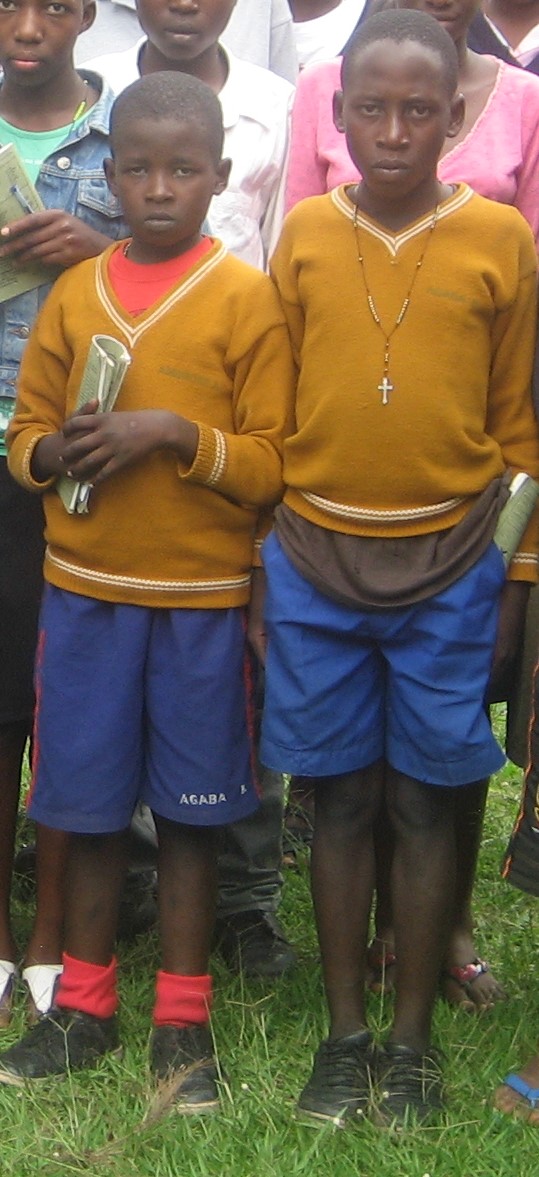
Ambrose and Braise at school with the support of the OVC Mbarara Sustainable Program
Affected by their Family in Crisis
Our Program saw the suffering of the younger children, Ambrose and Braise, and offered to take them into the Program. The goal was to provide some relief and facilitate a family-wide attitude adjustment. In addition, We provided counseling and reconciliatory support to the rest of the family to have a healthy place to process their emotions.
Through all these interventions, we were able to help the family manage and initiate sustainable self-development projects, have peaceful and productive conversations together, observe boundaries, understand each other, and increase the family income.
Eventually, the older children started having their own families and leaving home. Their father resolved to make up for the lost time by looking after the young children better than he used to by stopping his alcohol use and working together with his wife. He had become more attentive at home as a result.
How do OVC-SP's family-based projects work?
The Orphans and Vulnerable Children Sustainable Program (OVC-SP) runs family-based projects supporting HIV/AIDS, orphans, and other vulnerable children in education, health, psychological and psychosocial welfare. Ambrose and Braise were added to our Program after their father received a referral, which is typically how many parents and families hear about our work.
Their father was able to approach us and advocate for his children, family, and their support needs. As a result, we quickly admitted Ambrose and Braise. After program admission, we immediately began supporting the family through school fees, counseling, empowerment training geared towards children and parents, and supportive visits at home.
By the time the siblings phased out of the Program in 2014, Ambrose and Braise were in Primary 3 and 2. They had been in our Program and supported by us fully for three years. Because of our work with the whole family, their parents felt prepared to take on more responsibility through our entrepreneurship skills training and start-up financial support.
How we prepare families for Program phase-out
At OVC-SP, we believed in the family's ability to resolve their issues with appropriate support to stay together, rechanneling their energy to grow and support each other and meet their needs with time.
Our Program supported Ambrose and Braise's family for three years, taught skills, gave capital, and now remained consistently followed up at least semi-annually.
We gave the children and parents counseling (individual and group) and sent them to behavior workshops and entrepreneurship training. We had equipped them for success but remained cautious before pursuing program phase-out in case reducing our support and funding could potentially worsen Ambrose and Braise's family adjustment.
Still, gradually, our Program adopted virtual means of keeping in touch, and we've since successfully kept communication with them alive.
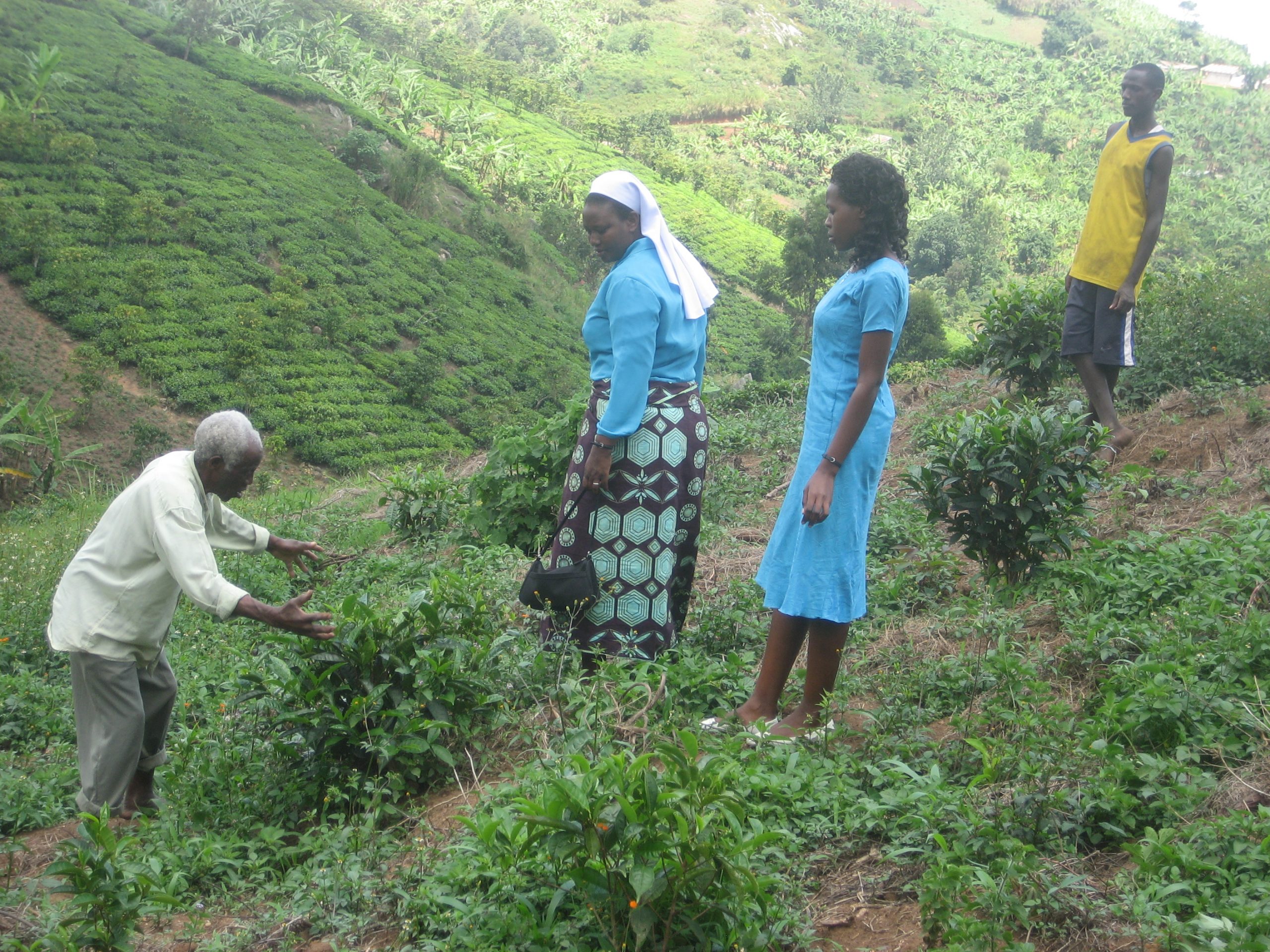
Braise and father harvesting tea together - and income-generating project sponsored by OVC Mbarara Sustainable Program.
Program Phase-out
After the families' formal phase-out of the project, our staff continues our support of Ambrose and Braise's family (and others) by maintaining occasional monitoring and follow-up meetings.
Through those meetings, we can ensure sustainable family-based care continues. In addition, we make referrals when necessary and motivate all family members (children and parents) to have hope, continue working together, and relate to each other better so children and their families can thrive.
Today, Ambrose, Braise, and their parents continue attending their projects for self-development and psychosocial support. As a result, their whole family plans together and thinks of life as a team effort.
As a result, they tend to agree on essential decisions, work together through conflict, and have strong cohesion in the home. This has helped them enjoy their work and free time together, encourage each other, advise each other, coordinate, and live in harmony.
Why this story is important
This story isn't unique, as many families struggle to identify and pursue areas of improvement or identify ways to capitalize on family strengths.
This story also illustrates common struggles in blended families, where children come from different parents, and how grief impacts a family when one parent dies. Relational issues, child mistreatment, and the negative handling of familial conflicts can happen when the balance of a family is compromised, and the family goes into crisis mode.
In the case of Ambrose and Braise's family, this mistreatment and crisis stemmed from 'an absent father' in his first marriage, the accumulated childhood anger in the older children due to their father's absence, and the grief over the loss of their mother and family pillar.
It also could have stemmed from a family lacking unifying values and practices, with each member competing for space and power. The older children had pessimistic attitudes due to grief and familial trauma (thinking that the family ended with the death of one parent). Unfortunately, many families are breaking because of these and other issues, including poverty, alcohol abuse, and child emotional neglect, so we're spreading awareness.
An Appreciation
Without donor support, we couldn't have supported and facilitated these changes in families like Ambrose and Braise. Thank you so much to our donors for helping us make our work possible. We also thank our hardworking staff for their commitment and passion for our child-centered, family-based Program.
Without donor support in school fees for our Program's children, staff commitment, and the families' dedication, an optimistic attitude kept the family striving and staying together despite the challenges.
Seven Years Later
Seven years after the formal project phase-out, a home visit was conducted to Ambrose and Braise's home and met with family gratitude. We noted some family member adjustments to pursue self-sustaining financial empowerment. We were able to recommend resources to the family's needs, and the two children were able to stay in school as the family emerged united from the pull-and-push.
Our Program encourages the family, empowers parents to play their parental role consciously, and motivates children to draw healthy meaning from their experiences. Our primary mission at OVC Mbarara is to empower the orphans, other vulnerable children, and caretakers to live decent and meaningful lives.
Our Program will remain in touch with the family, maintaining a healthy distant-supporter role to empower the members to face their situations and generate productive solutions that work for them and protect the children. As a result, we believe their family—wherever in life it is, can adjust and cope better with their challenges and live more meaningful and productive lives.
Changing the world for a child and their family
Ambrose and Braise represent the many other children in our Program, their families struggling here and there. For some, when the formal Program phased out, their situation got worse, while others could make healthy adjustments and move on. Unfortunately, family vulnerability can vary and be challenging to measure, so we regularly check on family progress after the program phase-out.
Getting involved
We invite any well-wishers to join our mission, empower families to make them healthy for children, and support members to grow together.
If you feel called to join us on our mission of ensuring sustainable family-based care for children, consider donating to help us better follow up with families, provide school fees for children, and facilitate provide family-strengthening services to keep families together.
For more stories like this, sign up to get updates by email on our website below so that you can be a part of our OVC-SP community.